
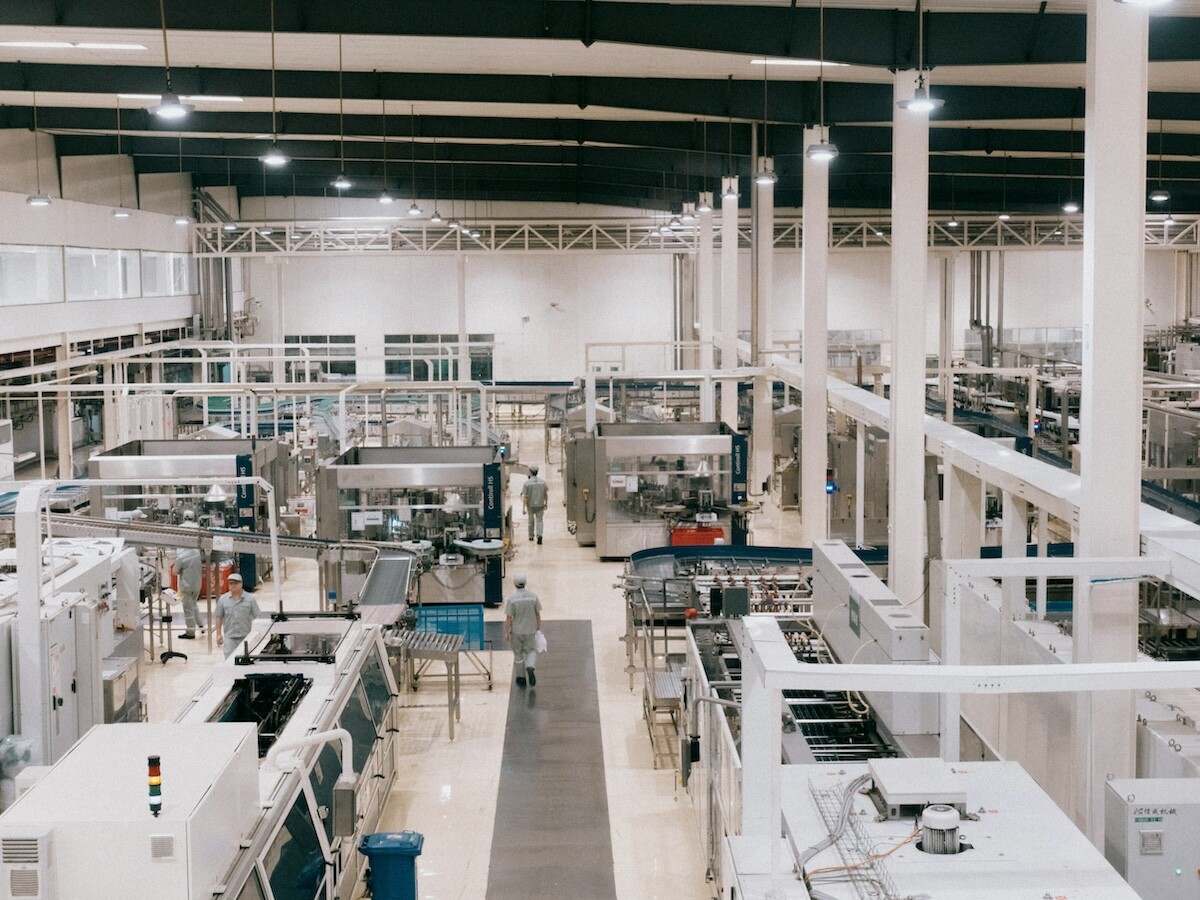
Technology is as much a part of the modern factory as the walls and machinery. But with industrial technology, control software and ancillary services development accelerating at breakneck speed, assessing and justifying the cost becomes more complex.
Typical value calculation methods like cost-based analysis are fine for traditional upgrades to factory and plant systems. But as cloud, Internet of Things, and AI become a broader part of these systems, value takes on a different perspective. That’s as the connected trucks and cargo come and go, as well as the digitally enabled workers signing in for shifts.
The Rise of Smart Factories
At the simpler end of the equation, we have developments like Industrie 4.0 which focused on factory automation (and 5.0 which evolves to a human-centric, sustainable approach). Producers and manufacturers that followed the i4.0 approach can upgrade to 5.0 and the next era of manufacturing with relative ease, adopting new technologies, including:
- Advanced robotics provides collaborative robots that are designed to work safely alongside human workers.
- Artificial intelligence to optimise production through real-time data and improve product quality.
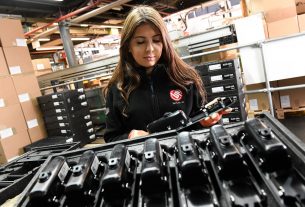
- Wearable technology brings human workers into the loop with AR/VR headsets showing deep inside manufacturing systems, providing step-by-step support and instant documentation.
These technologies are connected and smart, improving their results over time by gathering big data and using AI to analyse it. The benefits and values can be measured by testing with the likes of digital twin production lines. And modern dashboards can highlight complex production system benefits at board and non-technical levels.
Older factories could benefit from a technology-enabled makeover from industrial suppliers. But in many cases the cost-benefit of an all-new production and manufacturing line outweighs the cost of a patchwork upgrade.
Again, systemic cost analysis and digital measurement can demonstrate the improved performance and future-proof value of such an approach, while the reliability and easier maintenance for new systems will likely offer a huge benefit over the maintenance costs and downtime for older facilities.
Protecting Factories and the Supply Chain
Factory security is fast moving beyond the chain-link fence and a guard with a clipboard at the gate. The rise of industrial crime means factories need integrated security, monitoring external and internal threats, stretching along the supply chain to avoid the industrial-scale theft that threatens many industries.
Integrated security includes smart cameras providing cloud-based CCTV, strong access control for workers and visitors, delivering instant alerts for suspicious or unusual behaviour. Smart control centres can identify vehicles and people, and send information to security teams for intelligence-based responses.
And, in the case of on-site major incidents, natural disasters or other events, connected security systems can ensure that workers evacuate in the safest manner, gather in safe places and people at-risk can be supported.
The tagged protection of assets, and vehicles or shipments up and down the supply chain can help limit or track thefts, notably in areas where genuine components or materials are stolen and replaced with fake parts.
From food producers to automotive supply chains, delivery is now mission-critical to the smooth operation of digital factories. As AI takes control of contracts, pricing and routing, boosting production efficiency, longer-range tracking will be key to maintaining production.
The Cost-Benefit Value Power and Utilities
With great flexibility for production sites to generate their own power through solar, wind and other methods. Manufacturers need live tracking of energy sources from the grid and other sources, helping reduce costs and find the best prices for spare energy.
As more business leaders focus on the E in ESG, elements of digital monitoring become a key part in delivering results. Similarly, the use of fresh, recycled and grey water can further help a business promote its ESG credentials.
All of these layers add complexity to operations and management, which can be supported by digital connectivity to deliver understanding and highlight cost savings or efficiencies. Proving the value beyond any marketing and sales hype is the only way to ensure your next technology or manufacturing upgrade is really worth the cost.
Helpfully, as all parts of the production system connect together, seeing the larger picture is now easier for managers and c-suites, boosting confidence in the future of operations and driving further efficiency.