Greyhound Box, a Leeds-based manufacturer of sustainable corrugated packaging, has integrated 3D printing technology to enhance its production processes and reduce costs. Known for its innovative approach and commitment to recyclable, FSC-certified materials, the company continues to drive efficiency and sustainability across the packaging industry.
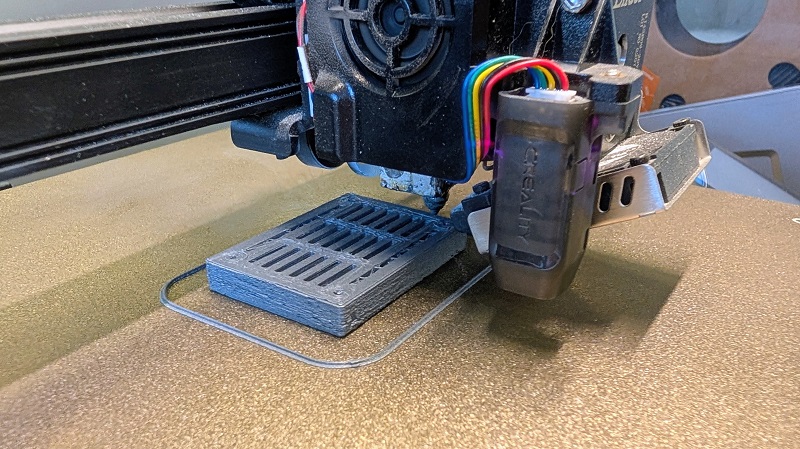
Greyhound Box has implemented 3D printing technology into its production workflow with the addition of the Creality Ender 3 S1 Pro, enhancing in-house maintenance and component fabrication capabilities. This integration allows for the precise and rapid manufacture of replacement and custom-engineered parts for their array of machinery, reducing reliance on external suppliers and minimising equipment downtime. The ability to prototype and refine designs directly on-site enables continuous performance optimisation, while also delivering measurable improvements in operational efficiency, cost reduction, and material sustainability.
One of the key successes has been the design and production of a 3D-printed nozzle for spraying glue with a mist. Traditionally, if a nozzle became damaged, it would prevent glue from misting properly and require a replacement costing £200. By contrast, Greyhound Box now produces the same component in-house for just a penny using 3D printing.
The team designed and printed a plastic nozzle to replace a metal part, first prototyping and testing it on machinery, then making adjustments before printing and testing again. The nozzle is produced using PETG (polyethylene terephthalate glycol) filament, a highly durable material. For added creativity, the nozzle was printed in a glow-in-the-dark finish.
Where possible, Greyhound Box also opts for PLA (polylactic acid) filament, a biodegradable material made from corn starch. While PLA is less resistant to impact compared to PETG, it is preferred for its sustainable properties.
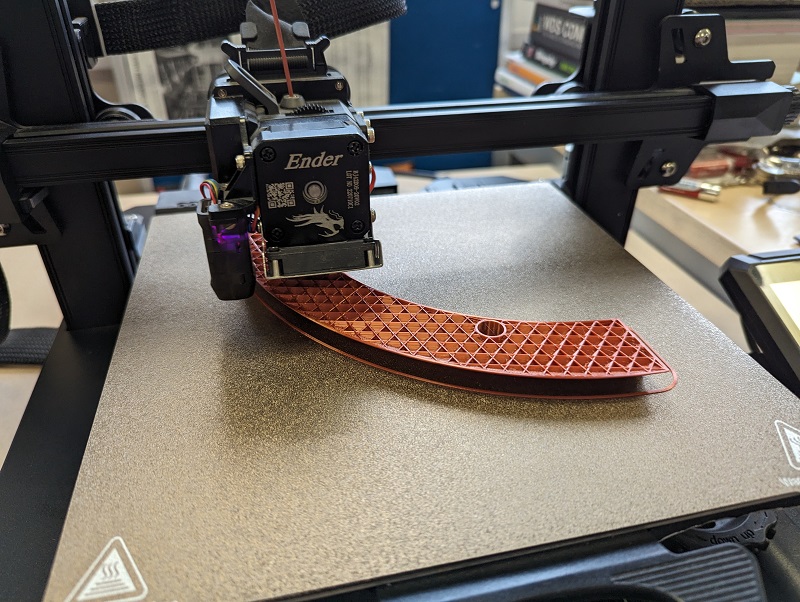
Printing statistics for the nozzle:
- 14 minutes to print
- ½ meter and 2 grams of plastic used
- Maximum printing size available: 22 cm²
3D printing has enabled Greyhound Box to create hundreds of custom components, many of which are brand new designs developed specifically to improve machine efficiency. The company is also exploring ways to replace traditionally metal components with lighter, more versatile plastic parts.
“With 3D printing, we can rapidly develop and implement custom components that directly enhance machine performance and avoid any unwanted downtime on our production floor. Using this approach allows us to produce bespoke machine components that can often be difficult or time-consuming to source externally.
Replacing traditional metal parts with lightweight, custom‑printed plastic enables us to prototype, test, and refine components such as our glow-in-the-dark PETG nozzle, ensuring durability.” – Cezary Biziewski, Operations Manager
By printing parts in-house, Greyhound Box avoids downtime, importation delays and costs, welding requirements, and difficulties sourcing replacement components. This innovation has already proved invaluable in saving both time and money.