


By 2030, 35 per cent of large manufacturing companies will have fully autonomous facilities — according to Industry 4.0 solutions specialist, Intelligence Industrielle. Better known as “lights-out manufacturing”, fully autonomous facilities promise to boost productivity, efficiency, safety and sustainability. Here, Mike Davies, managing director of drive system supplier, Electro Mechanical Systems (EMS), explores how advanced motor technology is making this vision of the future of manufacturing possible.
In September 2025, the World Economic Forum welcomed twelve new members into its Global Lighthouse Network, bringing total membership to 201 facilities across multiple industry sectors.
Facilities are chosen to join the Lighthouse Network based on their pioneering use of Industry 4.0 technologies — automation, robotics, AI, digital twins and data-driven production systems — to drive measurable improvements in their productivity, sustainability and innovation. Among the most ambitious practices explored in some Lighthouse sites is lights-out manufacturing.
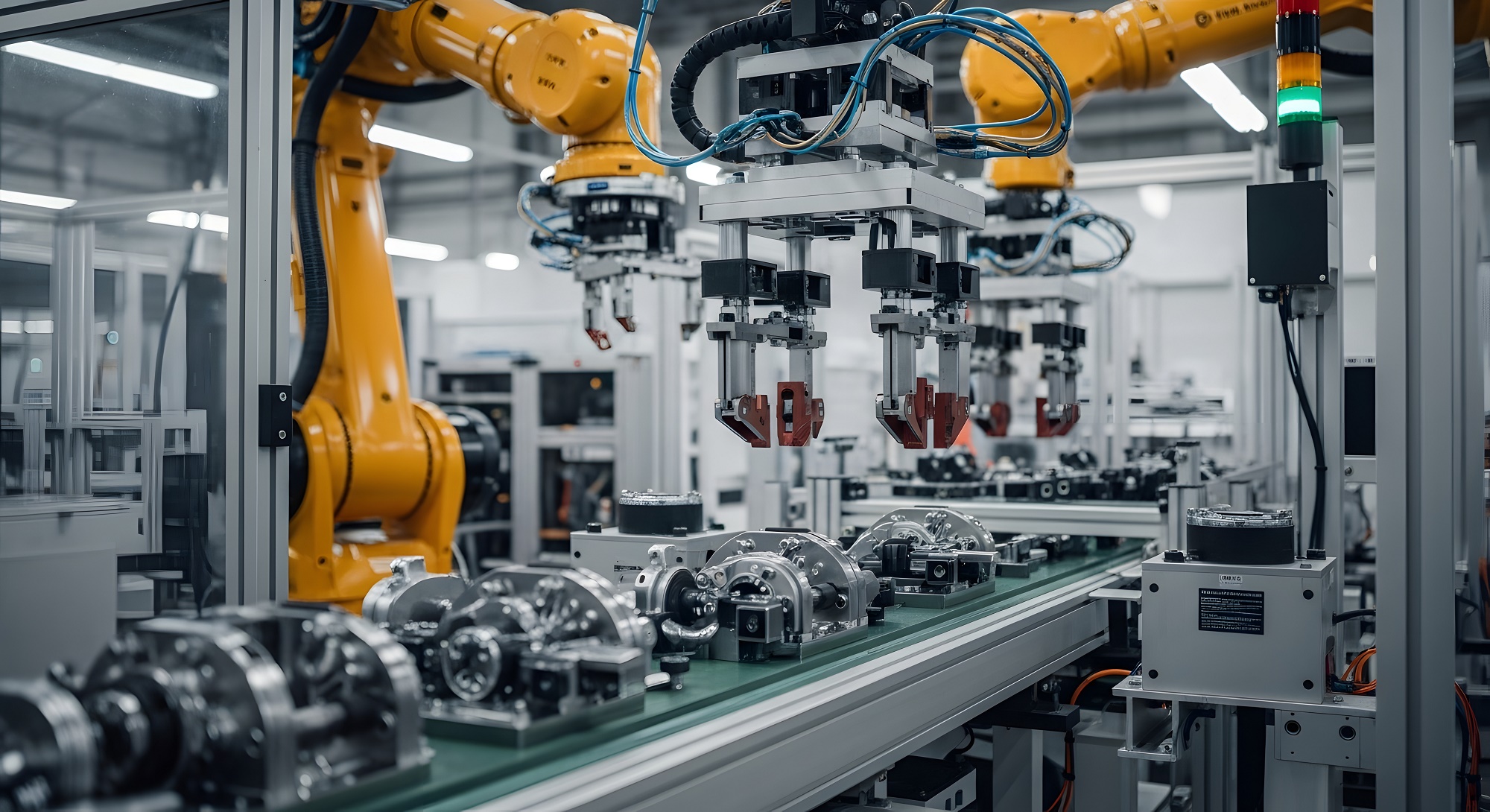
Lights-out manufacturing refers to production environments that operate around the clock with minimal human intervention. These sites rely upon automated and other Industry 4.0 technologies to assemble parts, manage assembly lines, perform inspections and handle logistics.
Even within the Lighthouse Network, fully unmanned production is uncommon. However, the success of one electronics manufacturing service leader in Vietnam and semiconductor manufacturer in Shanghai, whose operations have both minimal human intervention, demonstrates that lights-out production can transition from theory to practice.
Turning vision into reality
Lights-out manufacturing offers significant benefits. Factories can operate around the clock, increasing productivity by around 30 per cent, whilst reducing product defects by approximately 40 per cent. As fewer personnel are required on the factory floor to handle potentially hazardous tasks, overall risks to safety are minimised. Furthermore, through intelligent management of lighting, heating and ventilation, energy consumption can also be optimised, supporting sustainability goals and lowering overall operational costs.
Despite these advantages, implementing lights-out beyond pioneering facilities remains challenging.
Many sites still use legacy equipment that was never designed to integrate with modern automation or digital systems. This creates complex technical issues, potentially interrupting production, or presenting organisations with the high costs of equipping a factory for fully autonomous operations. This can range from tens to hundreds of millions of pounds, depending on facility size and production scale.
Beyond the challenges that lights-out directly presents to organisations, it also places unprecedented demands on the technologies that enable it.
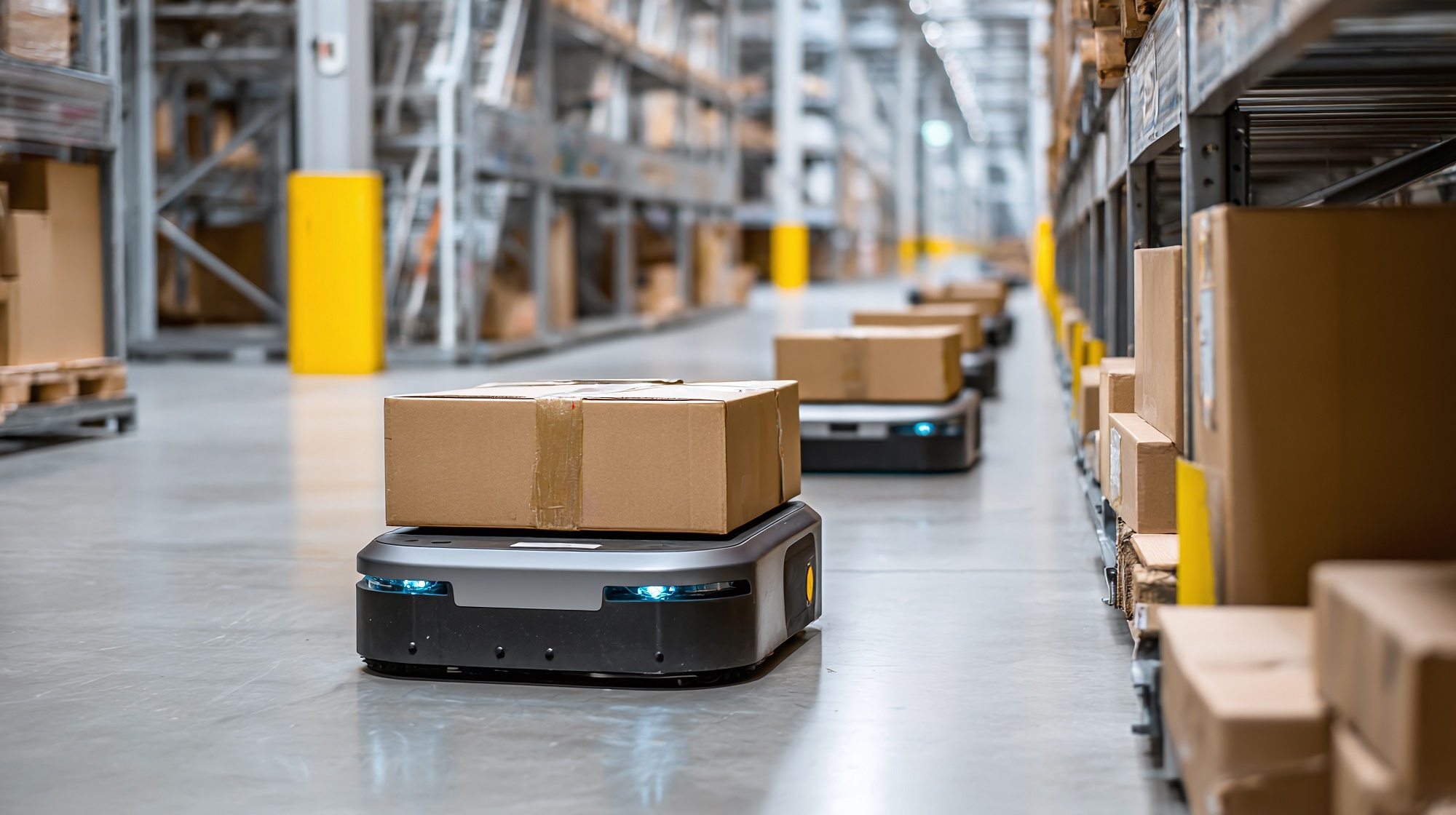
Robotic arms, conveyors, CNC machines, and autonomous guided vehicles are commonplace in facilities that utilise automated technologies. However, the expectation to continually operate, unsupervised, while maintaining consistent precision, efficiency and reliability, places considerable strain on these machines.
In a lights-out environment, the smallest fault in one system has the potential to ripple across a production line, disrupting logistics, compromising product quality or halting operations altogether. So, what’s the solution?
The solution doesn’t lie in designing increasingly advanced machines, which would only drive-up implementation costs.
At their core, the performance of automated technology is determined by its components. Only when components are engineered for reliability, precision and efficiency can lights-out systems operate as intended.
Driving lights-out
Motors are one of the most important components in automated technologies, providing the motion, control and accuracy required for operation.
Under the demands of continuous, unsupervised lights-out manufacturing, their significance increases, as they must deliver the long-term durability, consistent repeatability and high efficiency required to enable reliable, autonomous production.
Stepper motors, for example, move in fixed micro-increments, providing highly accurate positional control. Advanced stepper designs, such as FAULHABER’s AM3248 series, build upon this offering compact solutions, capable of the high torque necessary for demanding applications.
With 1.8-degree step angles and micro-stepping options, these motors provide fine positional resolution and smooth motion control. Their low inertia and minimal detent torque enable rapid acceleration and deceleration, while maintaining repeatability critical for tasks such as pick-and-place assembly or inspection systems. By delivering consistent and reliable motion, these motors ensure that automated equipment can perform reliably with minimal human input, safeguarding production output and quality.
In contrast, brushless DC motors offer a long service life, high efficiency, and smooth operation. As they use electronic commutation instead of mechanical brushes, wear and maintenance demands are reduced.
In a lights-out environment, this becomes particularly important. For example, AGVs navigating factory floors or conveyor systems transporting parts must run continuously, often around the clock. Brushless motors support this by delivering high efficiency and long-term durability, minimising unplanned downtime and helping manufacturers control operating costs. Their low vibration also helps to improve accuracy in delicate processes, such as those carried out by inspection equipment and CNC machining.
As manufacturing moves toward greater autonomy, the capabilities embedded in each component will define what is possible. Advanced motors, engineered for precision, durability and efficiency, are more than just parts of these systems; they are enablers of the lights-out future.
EMS is the exclusive UK and Ireland supplier of FAULHABER products. To find out more about the motors that are advancing lights-out manufacturing, get in touch.