
On 8 March 2026, we celebrated International Women’s Day – shining a spotlight on the impact women have on our society and discovering how our sectors can do better in terms of championing women at work.
Nowhere are these lessons more important than in the manufacturing industry, which proves to be challenging for women to break into and thrive. As of early 2026, the entry point remains a narrow gate, with women only making up 28.4% of the UK manufacturing workforce, despite accounting for nearly half of the total UK working population.
This is in addition to women facing extra pressure within the industry itself, with recent reports finding women in manufacturing 25% more likely to report work-related stress, depression or anxiety. 80% of women in technical and manufacturing roles are also considering leaving the sector due to a lack of recognition and career growth, culminating in women being four times more likely to leave the industry compared to men.
Against this backdrop of industry-wide challenges, GTK – a UK-based global manufacturer of cable assemblies with over 30 years of experience – is championing a different narrative, highlighting the impact of its senior female leaders.
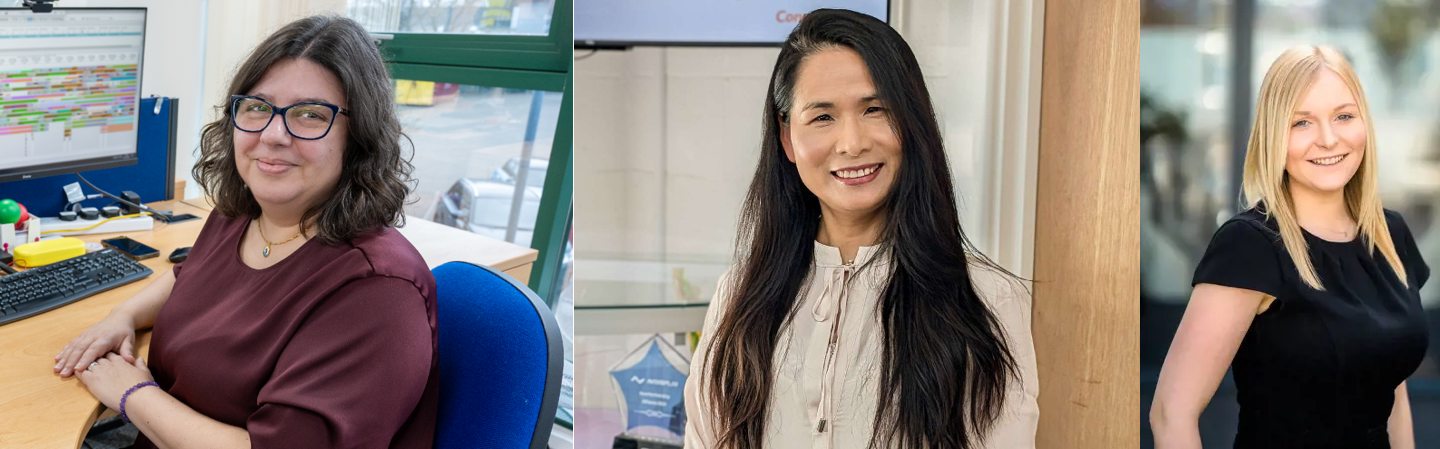
We sat down with Lucia Goncalves (Production Planner), Candice Robins (Finance and Far East Operations Director), and Leanne Matthew (HR Business Partner) to discuss their personal journeys within the industry, sharing their advice for the next generation of female talent looking to make an impact in the UK and across the globe.
Finding a calling in the manufacturing industry
Reflecting on how they each arrived in the manufacturing sector, the conversation revealed three very different career paths that ultimately converged at GTK.
Lucia Goncalves, Production Planner at GTK, began by sharing how her career developed through hands-on experience within electronics manufacturing: “I have over 20 years of experience in electronics manufacturing across the UK and Portugal. I began my career as a warehouse operator and quickly progressed into a team leader role. Later, becoming an SAP Key User expanded my technical and process knowledge, eventually opening the door to my transition into production planning.
“Custom manufacturing greatly appealed to me, with cable assembly manufacturing presenting a new challenge and an opportunity to step outside my comfort zone,” she explains.
Candice Robins, Finance and Far East Operations Director, then reflected on her long-standing passion for the financial side of business operations.
“I’ve been in finance for over 15 years, and in that time, I’ve always had a passion for using financial insight to solve problems and drive business performance,” says Candice Robins, Finance and Far East Operations Director. “My role is incredibly varied and involves working with teams across the business and in the Far East to ensure financial and operational alignment,” she adds.
For Leanne Matthew, HR Business Partner, the route into manufacturing was less direct.
“For me, I sort of fell into manufacturing HR,” Leanne Matthew, HR Business Partner, adds. “Originally, I wanted to be a police officer, and I trained as one before joining the Special Constabulary division of the Met Police. However, after a few years, I realised it wasn’t what I wanted to do – discovering HR in the manufacturing sector was a natural fit.”
Challenging perceptions by making a big impact
When the discussion turned to career progression and leadership, Leanne reflected on some of the challenges she had encountered earlier in her career.
“It’s not just about being a woman; age plays an important factor as well,” reveals Leanne. “A lot of the challenges I’ve faced in previous roles were in relation to not just being a woman, but being a younger woman in a leadership position.
“What’s supported me through this is being around strong female role models – that’s been invaluable to my career. These women have supported my development and had career conversations with me – that’s the kind of environment that will allow you to progress. I’m surrounded by strong female leaders at GTK now, and it creates an environment where women are supported and where we can really shine.”
Picking up on the theme of influence across the organisation, Candice explained how the finance function plays a role in enabling performance across the entire business.
“For me, as a Finance Operations Director, every part of my role is about supporting decisions and ensuring the business can perform at its best,” Candice adds. “So, I enjoy both the challenge and the impact it has on the organisation as a whole – it can be felt across every department, from the factory floor to sales.”
Lucia agreed that manufacturing roles often carry a wide-reaching impact, particularly within production environments where challenges can arise quickly.
“Every day is different in manufacturing,” says Lucia, “with my role focusing on ensuring production runs smoothly, efficiently and in line with customer expectations. For me, the most fun part is the problem solving – there’s always a new challenge, whether it’s a material shortage, a capacity constraint or a customer pulling in an order.”
“We shouldn’t be defined by our gender or our age. We should be defined by what we can achieve and our capabilities.” — Leanne Matthew
Ensuring space for women to thrive in manufacturing
As the conversation moved towards representation within the sector, Leanne highlighted the importance of visibility and role models in encouraging more women to pursue careers in manufacturing.
“Giving women in the sector a platform and showcasing role models helps promote engineering or manufacturing as a career path for women. Young girls and women need to know that they can go into manufacturing, because it’s not just wearing a high vis and a hard hat, there’s lots of other doors that can open and lots of other benefits,” explains Leanne.
She also pointed to the outdated perceptions that still shape how the industry is often viewed.
“We need to change the male-dominated image of engineering, manufacturing and other STEM sectors. If you Google them, and look at company websites, you’ll get images of men in high-vis and hard hats, but that’s only a tiny proportion of the sector’s workforce and output. Manufacturing is becoming more technology-based now, and you have essential roles in quality and procurement and back-office roles, like HR and marketing.”
Setting an example for women across the globe
Candice then reflected on how her international experience has shaped her approach to leadership within manufacturing.
“From Taiwan to the UK, my career journey has been shaped by global experiences, strategic growth and a deep commitment to financial excellence,” reveals Candice. “My MA in Human Resource Management and studies for the CIMA qualification have been a good foundation for team leadership and finance respectively. Plus, working both as a Finance and Administration Officer, and a Finance Manager, provided me with solid finance experience at multiple levels.
“Ultimately, my role is about bridging cultures, balancing books and driving sustainable growth. I’m proud to be an example of female leadership in manufacturing and I’m excited for what’s ahead with GTK.”
Lucia followed by sharing a practical example of how operational improvements within manufacturing planning can influence the wider business.
“When I started my role, I introduced backward planning,” Lucia adds. “This is the process of scheduling from the customer delivery date instead of from the day. This change stabilised the scheduling plan, aligned capacity and materials, and protected delivery dates, without unnecessary overtime or disruption.
“This prevents capacity becoming overloaded when several urgent orders are pulled in at once, allowing us to maintain a unique combination of flexibility, multi-site collaboration and a customer-first mindset. My efforts can be felt right throughout the business, helping create realistic schedules, spot risks early and communicate effectively across departments.”
Advice for women considering a career in manufacturing
As the discussion came to a close, Leanne shared some advice for women considering entering the manufacturing sector.
“Where you start your career is so important,” says Leanne. “If you find you’re not in the right company, sometimes you need to make the difficult decision to move on and find the right place. As I said earlier, in terms of support, I’ve always been around strong female role models, who shaped my career for the better.
“Also, don’t forget that if you’re looking to enter a more office-based role, like HR, marketing, finance and so on, these roles are available and also crucial in the manufacturing sector. Don’t limit yourself.”
As their conversation highlighted, modern manufacturing relies on a wide range of skills and perspectives. From finance and planning to people management and operations, the contributions of women across the industry continue to shape how manufacturing organisations evolve, innovate and grow.