In an era when artificial intelligence (AI) is rapidly becoming a fundamental element of contemporary infrastructure, the importance of safety, transparency, and accountability has reached unprecedented levels.
This is particularly relevant in the realm of traffic management, where decisions made by AI have a direct effect on public safety and mobility. With AI regulation heightening, the implications for purchasers of traffic cameras are far reaching. Leveraging the knowledge of Flir, an expert in this technology, therefore represents an astute operational decision.
On a global level, governments are implementing definitive measures to guarantee that AI is developed and utilized in a responsible manner. These efforts encompass broad legislative frameworks as well as specific AI-driven traffic management systems that provide quantifiable improvements in safety and efficiency.
Local authorities, councils, national/state-level agencies, police forces, and transport departments all need to take note. Investing in traffic cameras that do not comply with the applicable AI regulations can have serious connotations.
AI Acts and Orders
In the European Union (EU), the 2025 EU Artificial Intelligence Act was the first-ever comprehensive legal framework on AI worldwide. Its aim is to foster trustworthy AI in Europe by setting out a clear set of risk-based rules for AI developers and deployers regarding specific AI use cases. This pioneering framework classifies AI risks, mandates human oversight, and bans biometric surveillance and social scoring. Failure to comply may lead to penalties of up to 7% of global revenue, setting a notable global precedent.
Elsewhere, the White House’s AI Executive Order in the U.S. highlights the importance of risk assessments, bias reduction, and transparency in essential infrastructure, while the U.K.’s proposed Artificial Intelligence (Regulation) Bill aims to create a statutory framework for AI regulation, including a new AI Authority to coordinate oversight. Key proposals include: establishing regulatory ‘sandboxes’ for innovation; necessitating companies to appoint an AI officer; mandating transparency and independent audits for AI systems; and requiring reporting on training data and intellectual property to address copyright concerns.
Solving transportation challenges
Despite the groundswell of regulations, the demand for AI-enabled traffic cameras is likely to continue soaring because the potential benefits are so vast. Numerous countries across the globe are adopting AI to address urgent transportation issues. In Lucknow, India, for instance – a city of over 4 million residents – a proposed AI-driven intelligent traffic management system seeks to decrease journey times by 25%, lower fuel consumption by 20%, and provide a 40% reduction in ambulance response times.
In São Paulo, Brazil (the largest city in South America by population), the installation of an AI-driven traffic signal system along major freight routes such as Avenida dos Bandeirantes and Marginal Tietê utilizes real-time GPS information from truck fleets at hundreds of intersections. Just weeks after its launch, the pilot initiative recorded a 9% decrease in delivery times and a reduction in fuel usage of approximately 6.3% all attributed to more efficient signal timing and fewer stops.
Proprietary AI models for ITS
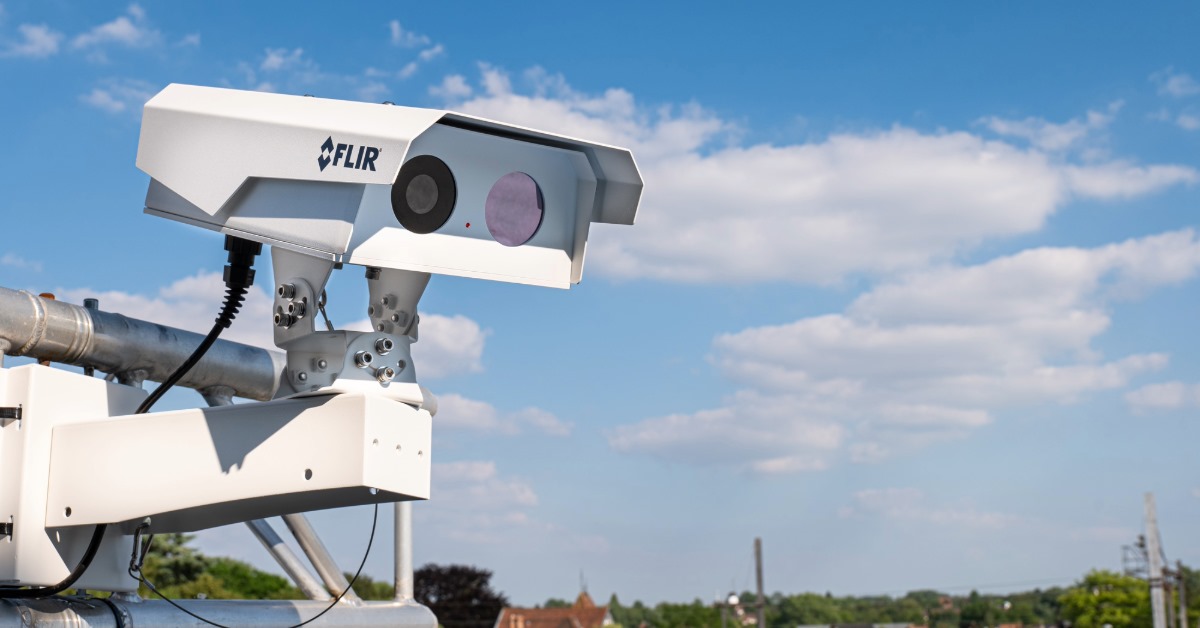
Flir has integrated the demands of cities and the requirements of regulations into its proprietary AI models for Intelligent Traffic Systems (ITS). Developed internally, the algorithms are trained solely on Flir thermal and visible-light camera data, which is version-controlled for complete traceability.
The data is also stored securely and is entirely anonymous. Flir engineers incorporate privacy safeguards into AI systems from the outset, employing methods like data minimization and on-device processing to evaluate data locally, transmitting only anonymous information to the cloud. No images are linked to identifiable individuals, ensuring compliance with the General Data Protection Regulation (GDPR) in Europe and privacy regulations throughout North America.
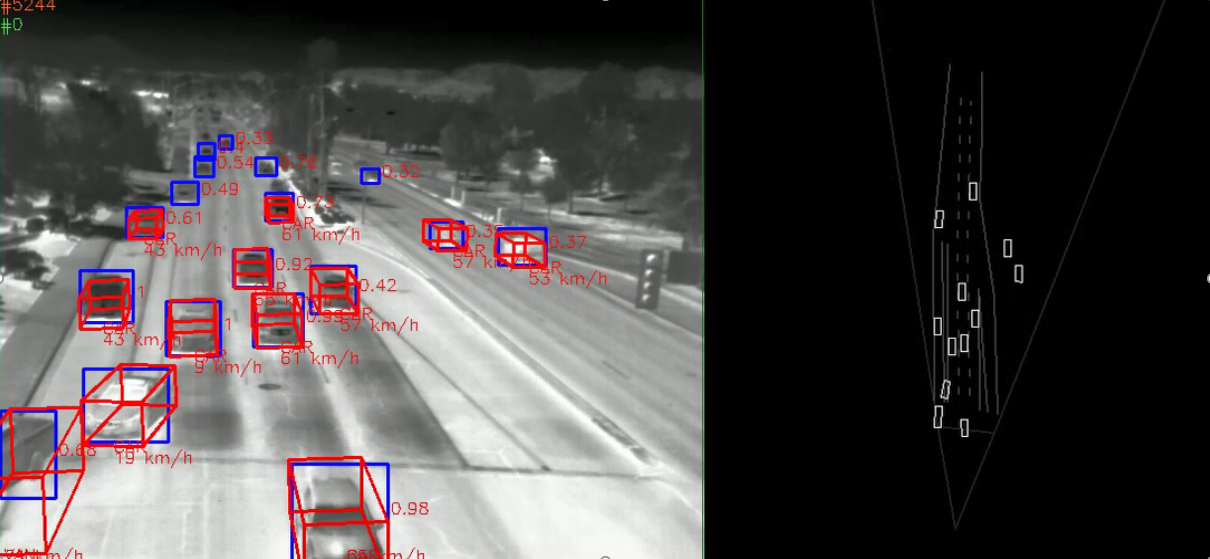
Instead of continuously gathering personal information, Flir’s AI leverages years of traffic knowledge to identify significant incidents – like wrong-way drivers, tunnel intrusions, and halted vehicles – without violating privacy laws. The proprietary algorithms function offline to improve cybersecurity.

A clear standard for compliance
As a point of note, Flir carries ISO/IEC 27001:2022 certification, which signifies a commitment to implementing this globally acknowledged standard across business operations. ISO/IEC 27001:2022 is the updated international standard for an information security management system (ISMS) that provides a framework for organizations to manage information security, cybersecurity, and privacy protection. As a result of this conformance, the confidentiality, integrity, and availability of information is assured within the Flir ecosystem, which encompasses everything from manufacturing and software platforms to customer-facing technologies.
In all applications, Flir AI avoids high-risk practices like biometric identification, social scoring, behavioral manipulation, real-time personal data streaming, or the creation of new personal data. The primary focus is always on precise, real-time incident detection that improves road safety.
From vibrant urban centers in Asia to the busy road networks of Europe and the freight corridors of Latin America, Flir provides AI solutions that adhere to the highest international regulatory and ethical standards. By collaborating with authorities at a local level, each installation is not only efficient and compliant but also crafted to gain the trust of regional communities and the public at large.
Looking ahead, it is natural for municipal authorities and other traffic sector stakeholders to feel wary of the uncertainty that surrounds future regulation. For this reason, partnering with a technology expert like Flir, which can call upon more than three decades of ITS experience, is imperative for optimal, future-proofed traffic camera solutions that meet legislative requirements.